AI grading is transforming how educational institutions evaluate student performance. Universities, schools, and training organizations are increasingly using AI-powered systems to assess essays, open-ended responses, and large-scale exams with higher speed, consistency, and scalability. In regions like Jordan, Saudi Arabia, and the wider Gulf, institutions are adopting AI grading to reduce administrative workload, improve grading consistency, and support large student populations without compromising academic standards.
What is AI Grading?
AI grading is the use of artificial intelligence systems to evaluate student answers in exams, assignments, and assessments. These systems analyze:
- Written essays
- Short answer questions
- Structured responses
- Programming and logic-based answers
How AI Grading Works
AI grading systems follow a structured process:
- The student submits an answer through an exam platform
- The system analyzes grammar, structure, and meaning
- The response is compared against grading rubrics or model answers
- A score is generated based on evaluation criteria
- Feedback is provided for improvement
- In advanced systems, instructors can review and override results
Why Institutions Are Adopting AI Grading
Educational institutions in Jordan, Saudi Arabia, and other regions are adopting AI grading systems due to:
- Large-scale student populations requiring faster grading
- High administrative workload on instructors
- Demand for consistent grading standards across departments
- Need for faster exam result delivery
- Growing digital transformation in education systems
Key Benefits of AI Grading
AI grading delivers measurable improvements across assessment workflows:
- Faster Evaluation at Scale: AI systems evaluate large volumes of submissions in minutes, reducing grading cycles from days to hours
- Consistent Assessment Standards: The same grading logic is applied across all submissions, reducing variability between instructors
- Reduced Instructor Workload: Educators can focus more on teaching instead of repetitive grading tasks
- Detailed Student Feedback: Structured feedback highlights strengths, weaknesses, and areas for improvement
- Improved Data Visibility: Institutions gain insights into performance trends, question difficulty, and curriculum effectiveness
AI Grading vs Traditional Grading
Traditional grading depends heavily on manual evaluation, which can lead to inconsistency between instructors, long grading cycles, limited scalability during peak exam periods, and delayed feedback for students. AI grading introduces automated evaluation workflows, faster turnaround time, standardized scoring models, and scalable assessment capacity. Most institutions use AI grading as a hybrid system where AI assists instructors rather than fully replacing them.
Where AI Grading is Most Effective
AI grading performs best in:
- Essay-based questions with clear rubrics
- Short answer assessments
- Large-scale university exams
- Standardized tests
- Programming and structured logic questions
Challenges and Considerations
While AI grading is highly effective, institutions must consider:
- The need for clear and well-defined grading rubrics
- Human oversight for complex or subjective answers
- Ensuring transparency in grading logic
- Maintaining academic trust and fairness
- Aligning AI systems with institutional policies
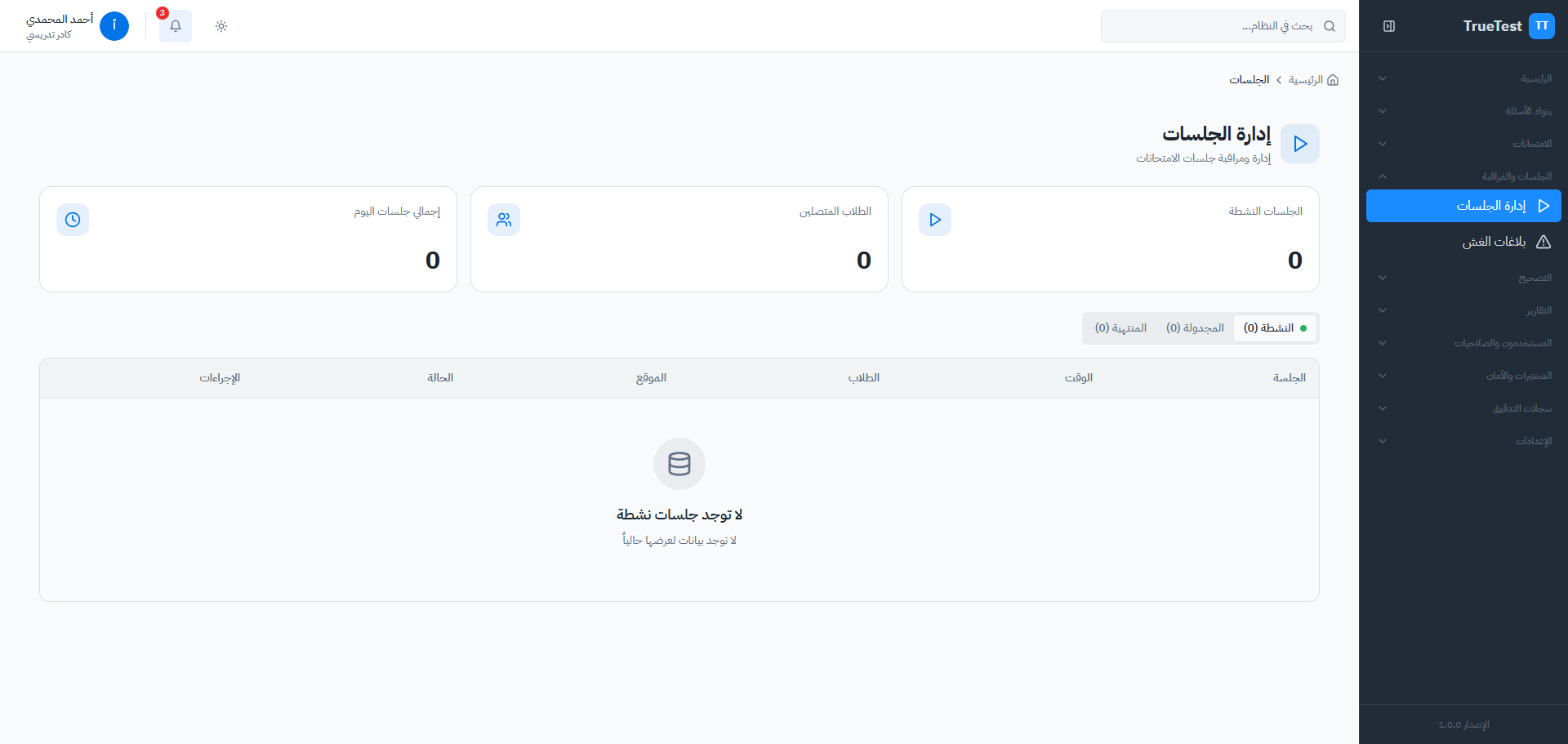
How TrueTest Implements AI Grading
TrueTest provides an AI-powered grading system designed for educational institutions in Jordan, Saudi Arabia, and across the region. It enables:
- Automated grading of essays and open-ended responses
- Instructor review and override capabilities
- Rubric-based evaluation alignment
- High consistency across large student populations
- Integration with secure exam environments
- Full Arabic-first grading support
Future of AI in Student Assessment
AI grading is expected to evolve into a core layer of digital education infrastructure. Future systems will combine adaptive assessment models, personalized feedback generation, advanced behavioral analysis, and real-time academic performance tracking — allowing institutions to continuously improve both teaching and assessment quality.
AI grading is redefining how educational institutions evaluate student performance. It improves speed, consistency, scalability, and feedback quality while reducing administrative burden on instructors. For institutions in Jordan, Saudi Arabia, and the wider region, AI grading is becoming a key component of modern digital education systems. Platforms like TrueTest enable institutions to adopt AI-powered assessment systems while maintaining full academic control, security, and transparency.